One of the smaller heartbreaks of my teenage years was the push to move from Myspace to Facebook. I remember distinctly the collective disappointment that you couldn’t personalize your page at all. No decorative cursors, no maximalist fonts, you couldn’t even change the background color of your page. (That last point has shifted in recent years, now that dark mode is a non-negotiable for accessibility. And that’s all the credit I’ll ever give Facebook.)
I’m not really sure what won my peers over in the end. I guess it was nice to visit someone’s page and not get jumpscared by Linkin_Park_-_In_The_End.mp3 auto-playing with no warning. Maybe receiving a “poke” was just close enough to surreptitious flirting for the hormone-beleaguered dark passenger within. Maybe the uniform, minimalist design still felt fresh and futuristic back then, and not like the DMV waiting room it has since become.
Whatever the reason, we left Myspace behind, and in doing so, we lost something crucial. Something many of us are still looking for. This is my attempt to rediscover that thing.
Writing on the wall
Mass market social media may be one of, if not the most volatile invention of the 2010s. The good that social media has done is often hard to quantify, while the harm seems ever-present in the forms of mass marketing, online harassment, a never-ending stream of advertisement, and in recent years, a vehicle for the flagrant violation of privacy, autonomy, and human rights. But in my opinion, social media’s most frightening effect is also one of its quietest: the compression of time. A black hole that eats your inhibition, numbs you to your surroundings, and hits fast-forward on the only earthly life you’ll ever have.
I believe you can trace the lineage of this vampiric tendency back to Facebook, as you can with many of the information disasters of the 2010s. In the 2000s, when we still conceived of the internet as a Place, we carved out our little corner of the internet as a page. People could come see your wall, check out what you have showcased, and leave a little comment for you to come back to, so you would know they were there. Like a mural, a bulletin board, and a guestbook all at once. This translated nicely to Facebook, who ironically didn’t refer to your space as a page, but as a wall. It was still somewhat a place, but you also had a steadily-increasing list of verbs. Poke, like, comment, become a fan, share with your friends.
And then to one side, like a nascent speck of mold, sat a reverse-chronological feed.
In 2011, your wall was reconfigured and rebranded as your timeline. The changes were mainly UI-based, but crucially, everything was now shown in reverse chronological order. Now not just your friends’ activity, as with the news feed, but every way you interact with the site is instantly visible, from the second you do it. Suddenly it feels less like a place to visit, and more like a closed-circuit feed for people to observe. Now there’s an incentive not to build something to remain in place and gather history, but to simply interact and passively allow your timeline to record history. Like dictating a book, for your friends to read back to front.
“This is just semantics,” you might say, but semantics are everything. Journalists, cops, propagandists, billionaires, organizers, any marginalized group in America. They all know that just what we call something can inform (or degrade) how we think about it. Demonstrator, protester, rioter—a whole spectrum of emotional responses lives between these seemingly interchangeable words. The powers that be understand the importance of semantics, and we only stand to suffer by ignoring it. When Facebook took that small step of changing your wall, something permanent, into your timeline, something transient, it was deliberate, and a new limit was imposed on our imagination of what the internet could be.
Skipping the better part of a decade: the algorithm-driven attention siphon of Instagram or TikTok follows naturally from this point. You don’t choose what you ingest, the content is chosen for you based on your ad profile and the text content of your private messages. It’s not called your “timeline” anymore - it’s just your profile; a term that doesn’t conjure the image of a bulletin board, a mural, or a history book, but a plain manila folder on a policeman’s desk, there because you handed it to him, and if you get a new apartment you’ll hand him a picture of the front door, and if you go on vacation you’ll tell him when and where, and if you cause unrest because his colleague killed your neighbor, he’ll know exactly what street you march on.
If this feels dramatic to read, I urge you to read about ICE’s social media surveillance, or literally anything about Minneapolis in the past month.
Re-reification
Ok, so social media sucks. What do we do?
Probably log off and touch grass, for starters. The connection we really want comes from being with people we trust, and the permanence we seek comes from building something good in the physical world, preferably together with those people. No amount of hanging out on Discord has ever hit the same as a hug, as I’ve been reminded by the outpouring of love from fellow grieving Minneapolitans this month.
However, I’m a technologist, which is Californian for idiot. And I can’t help but feel hopeful about the future of the internet.
The indie web is seeing a renaissance. New decentralized social media standards like Mastodon and the AT Protocol are gaining traction (although I would mistrust the supposed “stewards” of the latter). Anecodtally, my friends are making more intentional decisions about social media, if not actively seeking out or creating the spaces that keep them safe and celebrated.
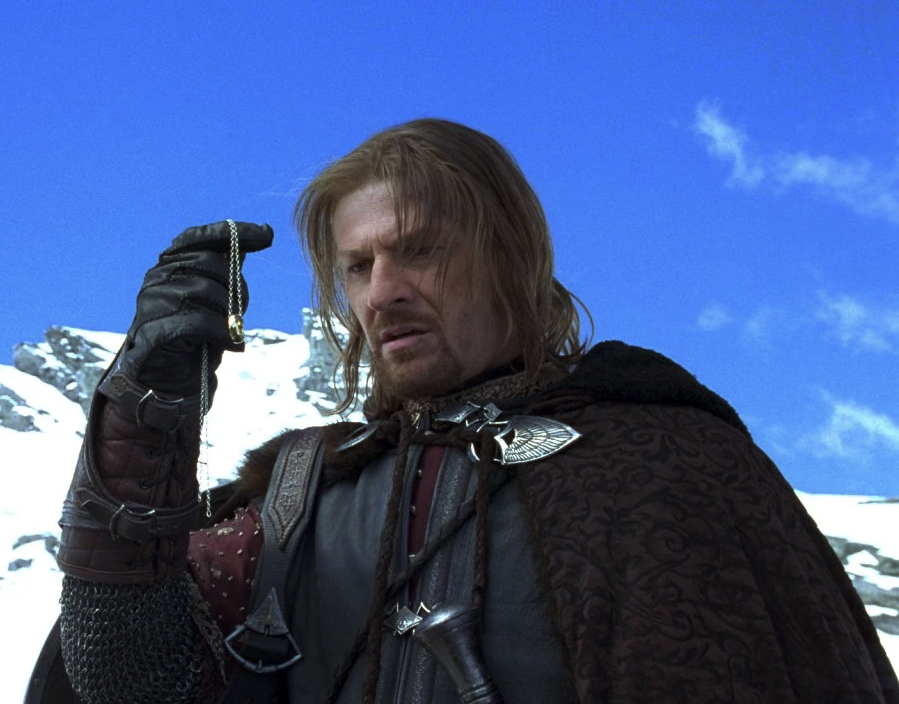
I’ve talked a lot of shit about people who think they can “change the system from the inside,” like Boromir ogling the ring of power. This hasn’t worked for cops, politicians, venture capitalists - the power still corrupts. Against my own better judgment, I have to think that some good can still come from this powerful, terrifying thing we’ve created. Not without great effort, but I think it can happen, and I think it starts with a few extremely difficult things:
Public Education
Fundamentally, the public does not understand what a computer is. I don’t blame them for that. The oldest generations of 2026 have had the misfortune of living through the most breakneck technological revolution of history, with the internet going from 1% to 97% of telecom traffic in 17 years, too quickly for communications to keep up with innovation. And the youngest generations have grown up mired in Windows 10 and smartphone apps, sophisticated technology indeed, but with the edges sanded off and the hood bolted shut. User-friendly is, by definition, prohibitively difficult to tinker with.
Now in another world, this would all be fine. I have no idea how combustion engines work, but I can still ride the bus. However, no one is trying to sell me a new bus, and they’re certainly not telling me the bus can write my emails or raise my child.
Tech companies, and especially those banking on artificial intelligence, are exploiting people’s ignorance about computing to sell them a god machine. Something they absolutely need to own, but need not and maybe should not understand. AI companies and their accomplices now account for nearly one-third of the US stock market, despite being overwhelmingly unprofitable. Whatever language-specific fields that AI excels in have seen only a modest bump in productivity, outweighed by a staggering energy cost, and the moral unscrupulousness of their stewards. ChatGPT conversations have led to multiple suicides, and Grok’s prime exports have amounted to a pittance more than eugenics and child porn.
Despite all of this, public sentiment around AI, while generally negative, seems to skew toward some belief in sentience. Once again, semantics are a bitch. “I asked ChatGPT”, “Claude suggested this.” Here is Reuters, alleged news source, citing what a piece of software “said” in its own defense. Around every conversation hovers the specter of AGI, Artificial General Intelligence, a sentient, supreme technological entity that knows everything and can outperform every human at every task.
Let’s get this out of the way - the very concept of AGI is complete make believe. Not even science fiction, it’s science fantasy. It’s not The Expanse, it’s Star Wars.
The fact that there is even a discussion of “intelligence” in a prompt transformer model is an indictment of both our science communication and Americans’ capacity for empathy, for recognition of humanity. If we’re doing our jobs as technologists, we need to make sure that any discussion of “sentient AI” is granted the same cultural ridicule as flat earthers and moon-landing deniers.
But beyond that, we need to lay out the fundamentals of computing for the layperson, down to the logic gate. It is truly incredible that we’ve been able to turn stone and sand into video games and messaging apps, but that transformation came from the diligent work of people. Millions of engineers, and logistics workers, and enslaved miners. There is immeasurable human cost to the technological luxuries we enjoy, some of it passionate, much of it non-consensual. Tech is many complicated and contradictory things, but it is distinctly not magic, and I believe our society hinges on us internalizing that as soon as possible.
With this fundamental understanding, we can start to teach people not just how to interact with a computer, but how to use it. A driver doesn’t need to know how to rebuild their transmission, but they should know their car well enough to turn into a skid, and not to park outside in the winter on less than 1/8 tank. Right now we live in a world where incompetent people act smug about AI eventually making humans irrelevant (all humans except them, of course). We need a public of responsible, independent people to understand what is and isn’t in their control as users of computers, smartphones, and software services. We need to fight technological helplessness with deeper understanding. And we need a deeper understanding so that we know when technology isn’t the solution at all.
Mise En Place
The indie web as an aspiration is important to me, maybe more so than the actual thing. Corporate social media isn’t going away any time soon, but regular people will always rise to fill the difference between the mass-produced solution and the good things we deserve. I dream of an internet that truly centers weird, funny, earnest fruits of human effort. I dream of skeuomorphic UI and hideous word art. I dream of going to people’s personal websites rather than their Instagram profiles. Where fonts and colors and layout are choices that regular people make. Not just fleeting moments in an endless stream, but places, locations with history and intent. Websites, to coin a term.
And truthfully, building and hosting a website has never been easier, and I’m not talking about Squarespace. There has always been some know-how needed, but if you can figure out an HTML page and a GitHub account, you’re basically already there. You can’t expect the same interactivity as a social media website, or the same slick UI as a native mobile app. And thank god for that. Those things have their place, but I would never expect all that from you. I just wanna see what kind of mural you’ll leave on the wall.
Conclusion
To be clear, this article does not and cannot cover everything it’s gonna take to carve out a more person-centered corner of the internet. I can’t even give you the bullet points. Any discussion of the erosion of the internet would be incomplete without touching on the vampiric nature of capitalism, the surveillance state, how “moderation” became a tool to police the tone of oppressed people while leaving literal Nazis unchecked, how the lower class is burdened both with the cost of technology and the reliance on it, how the creator of 4chan received direction from goddamn Jeffrey Epstein…
As with any other part of modern America, a better world lies behind a dizzying amount of labor, many spine-chilling reckonings, and no small potential for bloodshed.
The points I’ve listed above are just a tiny line of silver, one potential avenue that could get us closer. It’s imperfect, and it’s subject to change. I just wanna talk about it more. I wanna talk to you more. So see you next time?
august m